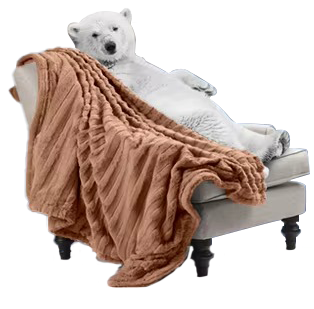

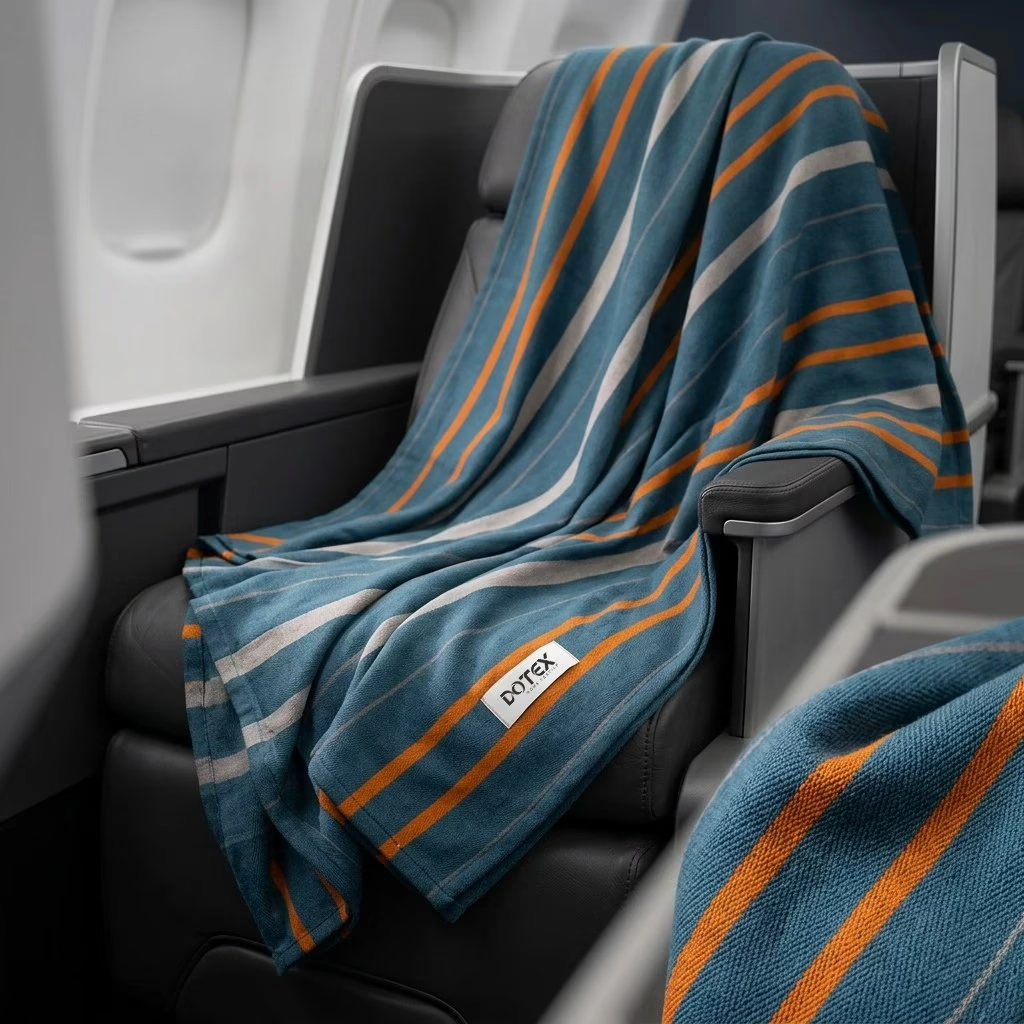
A manta de cabaña Parece sencillo hasta que llega a un asiento de avión.
En una mesa de muestras, la mayoría de los productos parecen aceptables. Las diferencias se aprecian bajo la iluminación de la cabina, tras doblarlos repetidamente o cuando la tela roza una chaqueta de lana en aire seco. El forro polar barato puede ser suave al tacto, pero aun así tener un aspecto común, acumular pelusa y parecer una manta promocional.
Puede funcionar en clase económica, pero no es la opción más adecuada para una cabina premium.
Para las aerolíneas que buscan combinar la sostenibilidad con una imagen de marca más sólida, las mantas tejidas de alta calidad son una excelente opción. El poliéster reciclado no tiene por qué tener un aspecto barato. La confección influye mucho en el resultado final.
¿Qué debería aportar una manta a la experiencia de primera clase o clase ejecutiva?
En un camarote de primera clase, una manta no solo sirve para aislar del frío. Permanece a la vista durante horas, manipulada por la tripulación y colocada junto a las almohadas o los neceseres.
Debe tener una caída limpia, mantener un borde recto y conservar su color bajo la luz cálida de la cabina. La superficie debe tener un tacto controlado, no excesivamente difuso.
Una manta de clase ejecutiva también debe tener un aspecto diferente al de una manta de clase económica. Un forro polar más grueso con un logotipo sigue siendo reconocible como forro polar. Puede que sea más abrigado, pero el lenguaje visual no ha cambiado.
La construcción tejida sí.
¿En qué se diferencian las mantas tejidas de rPET de las mantas de forro polar de punto?
La diferencia comienza antes del teñido, el acabado o la aplicación del logotipo. Comienza con la forma en que está confeccionada la tela.
Una manta tejida y una manta de forro polar pueden tener un contenido de polímero similar y aun así comportarse de manera diferente. Las etiquetas de los materiales no proporcionan suficiente información al equipo de compras.
Cómo se fabrica el tejido rPET
El tejido se forma entrelazando hilos de urdimbre y trama bajo tensión controlada. Esta estructura le confiere a la manta una estructura estable, una superficie lisa y una definición precisa del diseño.
Las rayas, los cuadros, los bordes y los logotipos jacquard se pueden incorporar a la tela en lugar de añadirlos posteriormente. El resultado se ve más intencional y con un acabado más cuidado.
Para un uso en cabinas de primera clase, esto es importante. Una manta tejida puede mantener un pliegue ordenado en el asiento y, al mismo tiempo, abrirse con una caída suave.
¿Qué tan bajo? Costo de producción del vellón
La mayoría de los tejidos polares de bajo costo se elaboran a partir de tela de poliéster tejida. La superficie se cepilla o se le da relieve para crear suavidad y atrapar el aire.
El tejido polar es ligero, cálido, flexible y económico a gran escala. Es ideal para programas donde el precio y la comodidad básica son primordiales.
Su punto débil reside en la superficie en relieve. Las fibras pueden acumular pelusa y aplanarse de forma irregular. Tras lavados repetidos, se observa la formación de bolitas o una compresión desigual, especialmente en colores oscuros.
| Factor de adquisición | Manta tejida premium de rPET | Manta de forro polar de punto barata |
| Superficie | Suave y estructurado | Elevado y esponjoso |
| retención de forma | Estable | Más estiramiento y distorsión |
| Herrada | Jacquard, borde, etiqueta | Impresión, bordado, etiqueta |
| Posicionamiento de la cabina | Cabinas premium | Uso económico o promocional |
| Comportamiento estático | Más fácil de diseñar con acabados | Más contacto de pila con ropa |
| Valor percibido | Textiles a medida | manta de productos básicos |
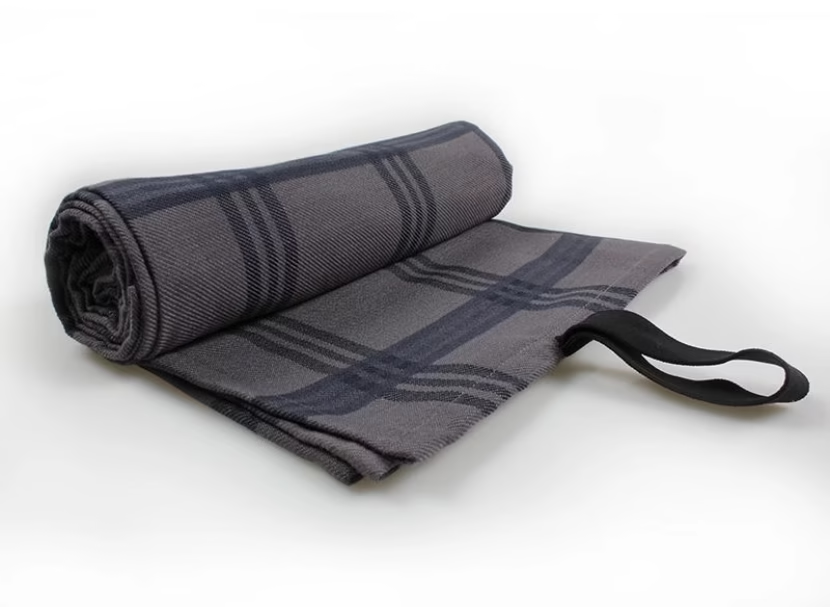
¿Por qué la confección con tejido de punto ofrece una apariencia y una sensación más lujosas en la cabina?
El lujo en una manta rara vez se basa únicamente en su grosor.
Un forro polar grueso aún puede parecer barato. Uno más ligero manta tejida Puede parecer caro porque la superficie, el borde, el estampado y la caída se comportan como un solo sistema.
Bajo la iluminación de la cabina, la textura tejida capta la luz de forma controlada. El hilo bicolor o el sutil diseño de espiga crean profundidad. Los bordes permanecen visibles. Las esquinas se mantienen definidas.
Durante una revisión de muestras, dos mantas presentaban un azul oscuro casi idéntico. El tejido polar se veía opaco y ligeramente polvoriento bajo luz cálida. La muestra tejida mostraba un tono más nítido y un borde más definido. Misma gama de colores. Impresión totalmente diferente.
Es posible que los pasajeros no identifiquen el tipo de tejido. Sin embargo, sí notan el resultado.
¿Pueden las mantas tejidas de rPET reducir la electricidad estática y las molestias para los pasajeros?
La electricidad estática depende del tipo de fibra, la humedad, la estructura de la superficie, el contacto con la prenda y el acabado.
Las cabinas de los aviones son secas. Es común usar ropa sintética. Una superficie de poliéster cepillado facilita el contacto con las fibras sueltas cuando la manta se desliza sobre una chaqueta o la funda del asiento.
Una superficie lisa y tejida suele generar menos roce que un tejido polar con relieve. Esto puede reducir la adherencia y el ligero crujido que a veces notan los pasajeros. Sin embargo, no es una garantía. El poliéster reciclado sigue siendo poliéster.
La respuesta desde el punto de vista de la ingeniería es especificar el rendimiento, no darlo por sentado.
Entre las comprobaciones útiles se incluyen la resistencia superficial, la disipación de carga, la durabilidad del acabado y la retención tras los ciclos de lavado. El método de ensayo y el rango de aceptación deben figurar en la ficha técnica.
Decir que un producto es "antiestático" sin ninguna referencia a una prueba es un lenguaje de marketing.
¿Por qué las mantas tejidas de alta calidad para aerolíneas tienen un precio unitario más elevado?
Un precio unitario bajo puede resultar caro cuando el producto perjudica la experiencia en la cabina.
Mantas de avión tejidas de primera calidad Suelen ser más caros porque la selección del hilo, el tiempo de telar, el control del patrón, el acabado y la inspección son más exigentes. La ventaja es la diferenciación.
Para los compradores de cabinas premium, la manta ayuda a justificar la jerarquía de la cabina y refuerza una identidad textil reconocible en lugar de otra manta genérica azul marino.
Las aerolíneas buscan materiales reciclados, pero a menudo temen que el resultado parezca un sustituto de menor calidad. El rPET tejido reduce esa preocupación. Se mantiene la esencia del material reciclado, al tiempo que el producto conserva un diseño pensado para un entorno de alta gama.
Eso es más ventajoso que competir únicamente en función del coste por unidad.
¿Qué deben especificar los compradores al adquirir textiles de lujo para cabinas de rPET al por mayor?
Los programas de venta al por mayor de textiles de lujo para cabinas de rPET requieren especificaciones más estrictas que las mantas promocionales. Una foto del producto y el número de gramajes no son suficientes.
Las especificaciones de compra deben incluir:
- Contenido reciclado y certificación
- Título del hilo, tipo de tejido y gramaje final (GSM)
- Tamaño de la manta y tolerancia dimensional
- Estándar de color bajo iluminación acordada
- Detalles del jacquard, el borde, el logotipo y la etiqueta.
- Tratamiento antiestático y método de prueba
- Formación de bolitas, abrasión y solidez del color.
- Método de lavado y límites de encogimiento
- Requisitos de inflamabilidad pertinentes
- Embalaje y presentación a bordo
Utilice tres muestras: una muestra de material, una muestra de desarrollo terminada y una muestra de preproducción sellada. Estas confirman el color, la textura, el comportamiento de los bordes, la caída y el estándar de volumen.
Comprueba ambos lados. Los compradores suelen aprobar el anverso e ignorar el reverso, pero este último influye en la suavidad cuando se le da la vuelta a la manta.
¿Por qué elegir DOTEX para mantas de avión tejidas a medida de rPET?
Un proyecto de mantas tejidas para aerolíneas depende de algo más que la capacidad de costura. El abastecimiento de hilo, el tejido, el acabado, la confección, la inspección y el empaquetado deben estar perfectamente coordinados.
DOTEX Textile Ofrece soporte para el desarrollo de productos OEM y ODM para compradores de textiles para aerolíneas y el hogar. Esto permite reducir las transferencias de responsabilidades y mejorar el control sobre los patrones personalizados, las etiquetas, el embalaje y la documentación de materiales reciclados.
Un proyecto serio debe comenzar con la revisión de las especificaciones y la aprobación de las muestras. Una apariencia de alta calidad se logra gracias a la estructura, el acabado, el tratamiento de los bordes y la uniformidad en toda la producción.
Conclusión: Los materiales reciclados aún pueden brindar una experiencia de cabina de primera calidad.
El forro polar barato tiene su utilidad. Es cálido, rápido y económico.
Las cabinas de lujo requieren un diseño más cuidado. El rPET tejido ofrece una superficie más limpia, mayor resistencia, mejores opciones de personalización y una sensación de valor más convincente. Permite que la sostenibilidad enriquezca la experiencia a bordo en lugar de perjudicarla.
Contacte con DOTEX Textile para obtener muestras y un presupuesto personalizado..
Preguntas frecuentes
P: ¿Son las mantas tejidas de rPET más pesadas que las mantas de forro polar?
No siempre. El peso depende del número de hilos, la densidad del tejido y el acabado. Una manta tejida puede ser consistente sin llegar a ser voluminosa.
P: ¿Se pueden incluir logotipos personalizados en las mantas tejidas para aerolíneas?
Sí. Los logotipos se pueden tejer en patrones jacquard, añadir mediante etiquetas o integrar en los bordes.
P: ¿Las mantas tejidas de rPET son completamente antiestáticas?
Ningún tejido debería describirse de esa manera sin datos de prueba. Las superficies tejidas pueden reducir el contacto con el pelo y los acabados antiestáticos pueden mejorar el rendimiento, pero el resultado debe verificarse.
P: ¿Cuál es la mejor manera de evaluar una muestra de un proveedor?
Comprueba la superficie bajo luz cálida y fría, dóblala varias veces, frótala contra telas comunes, inspecciona ambos lados y revisa el borde después de lavarla. Pruébala como un producto de uso diario, no solo sobre un escritorio.