
Introduction: Why OEKO-TEX Documentation Matters in Blanket Sourcing
European retail onboarding opens at the same tab every time: chemical safety. A supplier without the documents is out before the first sample is cut. And the certificate in the folder has to cover the right object. Is it the faux fur throw blanket that ships — or the yarn it started from? Different certification objects, different answers. Settle it before sampling, while re-testing is still cheap.
Short answer: request a current OEKO-TEX STANDARD 100 certificate, verify the label number and scope, obtain matching test or component documentation where available, and map the evidence to the blanket’s actual composition, color, finish, trims and intended use. Also collect any separate REACH, retailer RSL or market-specific documents required for the order.
Why an Upstream Certificate Does Not Automatically Cover the Finished Blanket
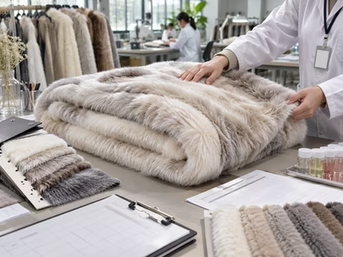
A yarn or greige-fabric certificate confirms the article and production stage described in its certified scope. It does not automatically demonstrate that later dyeing, printing, finishing, sewing, labels or trims are covered for the finished blanket. Buyers should check the scope and supporting component documents instead of relying on the upstream certificate alone.
Trace the route — Yarn → Knitting → Dyeing → Tip-Dyeing / Frosting → Finishing → Cutting & Sewing → Finished Blanket — and identify every stage that changes the material or adds a component. Colorants, auxiliaries, softeners, anti-static treatments, sewing thread, labels and decorative trims can all affect the evidence required for the ordered configuration.
OEKO-TEX STANDARD 100 uses a modular certification system. Evidence from certified upstream components can support a finished product, but only when the applicable certificate scope and component documents collectively match the article being supplied. Request documentation that can be traced to the delivered blanket configuration.
Which OEKO-TEX Documents Should Buyers Request?
Three document sets matter.
1. A Current OEKO-TEX STANDARD 100 Certificate
The full certificate comes first — verify:
Certificate number
Certificate holder / company name
Issuing institute
Issue date and expiry date
Certified product category
Applicable product class
Certificate scope
Validity runs one year — is the one in the folder still current? Check the status, not the print date on the PDF. When GRS, BSCI and OEKO-TEX files arrive together, they answer different questions — a buyer’s guide to textile certifications sorts out which is which.
2. The Matching Laboratory Test Report
Where disclosure is permitted, request the matching laboratory test report, report extract or other supporting test documentation and verify:
Tested sample description
Material composition
Testing date
Testing institute
Test results and applicable requirements
Then match the tested article to the order, including composition, colorway and processing state. A report on white greige fabric should not be treated as proof for a frosted two-tone finished blanket unless the certificate holder can demonstrate valid modular coverage for the later processing and components.
3. Supporting Material and Component Documents
Pre-certified components? Request the full set:
Certified yarn and fabric documents
Sewing thread documentation
Label and trim documentation
Material specifications and product BOM
The modular approach is permitted when its conditions are met. Ask whether the certificate scope and supporting documents collectively cover the fabric, later processing and every relevant component of the finished blanket. A yarn certificate alone does not automatically establish finished-product coverage.
How to Verify the Certificate’s Validity and Product Scope
Check the Certificate Number and Validity
Use the official OEKO-TEX Label Check to confirm that the certificate or label number is valid. Compare the holder and displayed scope with the supplier relationship and purchase documents. If the result is missing, unclear or does not match the order, ask the supplier and the issuing institute for clarification before approval.
Check Whether the Product Scope Matches the Blanket
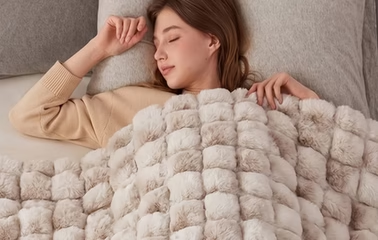
A valid certificate may still be irrelevant to a particular order if the product category, material, processing state or intended use does not match the purchase specification. Work through the rows:
|
Item to check |
What to confirm |
|---|---|
|
Product category |
Faux fur / plush / blanket |
|
Material |
Polyester or recycled polyester |
|
Processing state |
Dyed, printed, finished |
|
Product class |
Determined by actual intended use |
|
Accessories |
Sewing threads, labels, trims |
Does the Evidence Cover the Finished Faux Fur Throw Configuration?
1. Material Composition and Fabric Construction
Confirm:
The actual polyester, recycled-polyester and elastane composition specified for the order
The actual composition matches the report
Any approved material or supplier change is documented and re-evaluated
Fabric GSM and pile height match the purchased specification
Match the documented composition, GSM, pile construction and recycled-content status to the approved specification. Evidence for a recycled-polyester article should not be assumed to cover a virgin-polyester batch, or vice versa, unless both are expressly included in the applicable scope.
2. Colors, Dyeing and Printing Processes
Spell out:
Natural-looking multi-tonal dyeing
Tip-dyeing and frosting processes
Different colorways and customized shades
Printing techniques and colorants, where applicable
Tip-dyeing or frosting introduces additional processing. Confirm that the certificate scope or modular documentation accounts for the relevant colorants, auxiliaries and finished colorway rather than relying on an undyed greige report without further evidence.
3. Finishing Treatments
Confirm whether the blanket received:
Softening agents
Anti-static treatments
Anti-pilling treatments
Other chemical finishing agents, where applicable
Finishing changes the article after base-fabric production. Confirm whether the applicable certificate scope or supporting modular documents include the relevant finishing treatments. The fleece blanket manufacturer selection guide lists the production-side questions to ask alongside.
4. Accessories and Trims
Small items slip through reviews:
Sewing threads
Woven labels
Embroidery threads
Brand tags
Decorative patches
Leather or leather-like decorative labels require separate attention. Confirm whether they fall within the applicable OEKO-TEX scope and whether STANDARD 100, LEATHER STANDARD or other evidence is appropriate for the actual component.
A defensible approval file should connect the finished blanket specification to the applicable certificate scope and supporting documents for its materials, processing and components.
Which OEKO-TEX Product Class Matches the Intended Use?
STANDARD 100 sorts products into four classes:
|
Product class |
Intended use |
|---|---|
|
Class I |
Babies and children up to 36 months |
|
Class II |
Products with direct skin contact |
|
Class III |
Products without direct skin contact |
|
Class IV |
Decoration materials |
The product class follows the intended use and intensity of skin contact. Products for babies and children up to three years fall under Class I. Blankets intended for direct skin contact generally fall under Class II unless the actual use requires Class I or a buyer specifies a stricter requirement. Confirm the intended user and use scenario before approving the class.
Do not use "sensitive skin" as a substitute for an OEKO-TEX product class. State the verified class and certified scope, and avoid broader safety claims that the documentation does not support.
A Supplier Approval Checklist for EU Retail and Baby/Sensitive-Skin Projects
Current OEKO-TEX STANDARD 100 certificate.
Matching laboratory test report.
Verified certificate number and expiry date.
Finished blanket coverage demonstrated by the certificate scope or a complete, valid modular documentation set.
Correct fiber composition and recycled material status.
Relevant colors, printing and dyeing processes covered.
Finishing treatments and accessories identified.
Product class matches the intended use.
Additional REACH, SVHC or retailer-specific RSL documentation provided where required.
One boundary: STANDARD 100 tests harmful substances — passing it does not satisfy every quality, safety or regulatory requirement on an EU retail project, where retailer RSLs and applicable regulations still apply. Collect documentation against all of them.
Official Sources Buyers Can Use
Verify certificate validity through the official OEKO-TEX Label Check.
Review product classes, modular certification and the certification process on the official OEKO-TEX STANDARD 100 page.
How DOTEX Supports Reliable Faux Fur Blanket Sourcing
DOTEX can support this review through specification control and order-relevant document matching:
1. Integrated process control. Coordinating knitting, dyeing, cutting, sewing and packing within one production system can make material, color, finish and component records easier to trace. It does not extend a certificate beyond its stated scope, so each order still requires a document-to-specification review.
2. Specification control before bulk production. Material composition, GSM, pile construction, colorway, finishing and trims should be fixed in the approved specification and BOM. Any later change should trigger a review of the applicable certificate scope and supporting documents.
3. Order-relevant document review. Where applicable, DOTEX can provide current certificates and supporting test or component documents for buyer review. Availability and coverage depend on the selected material, color, finish, trim and intended use. Buyers should verify the final document package against the approved order specification and target-market requirements before bulk production.
Conclusion: Request Product-Specific Evidence Before Placing Your Order
A generic factory certificate alone may not demonstrate that a specific order is covered. Verify the label number and scope, match the finished specification or modular component set, and then check any additional regulatory or retailer requirements for the target market.
Looking for a reliable faux fur blanket manufacturer? Contact DOTEX Textile to discuss your product specification and the compliance documents applicable to your selected material, color, finish, trims and intended market.