
Yes, recycled airline blankets can survive 100+ industrial washes. But only when the blanket is engineered as an airline textile, not as a soft throw with a green label.
A new blanket usually feels fine. The real test starts after passenger use, folding, compression, high temperature washing, drying, and repacking. In airline service, the blanket meets zippers and laundry drums. Softness alone does not last long there.
Why Do Airlines Worry About Recycled Blanket Durability?
Airlines worry because recycled materials still carry a weak fiber reputation. Low grade recycled blankets can pill quickly, lose shape, fade, or feel thin after limited laundry cycles.
Passengers may not understand textile construction, but they notice surface condition. A pilled blanket looks old even when it is clean. A shrunken blanket looks cheap when stacked with normal size stock. A faded color weakens cabin consistency.
A low unit price does not mean low operating cost. If a blanket is replaced too early, the airline pays again through inventory pressure, emergency reorders, and inconsistent onboard presentation. Durable cabin blankets for airlines should be judged by lifecycle performance, not invoice price alone.
What Makes a Recycled Airline Blanket Strong Enough for 100+ Washes?
A recycled blanket does not become durable just because it is heavier. GSM helps, but strength starts deeper: yarn quality, fiber stability, fabric construction, dyeing, and finishing.
That is where the engineering work sits.
High Breaking Strength Recycled Yarn
High breaking strength matters because commercial washing pulls at the yarn over and over. One wash may not show much. Fifty washes will.
DOTEX Textile uses recycled yarn designed for higher breaking strength, helping the blanket resist fiber breakage during washing, drying, folding, and cabin handling. A stronger yarn also helps the fabric keep its body. Two blankets may look similar when new; after repeated wash cycles, the weaker one starts to feel loose, fuzzy, and tired.
Engineered rPET Instead of Ordinary Recycled Fiber
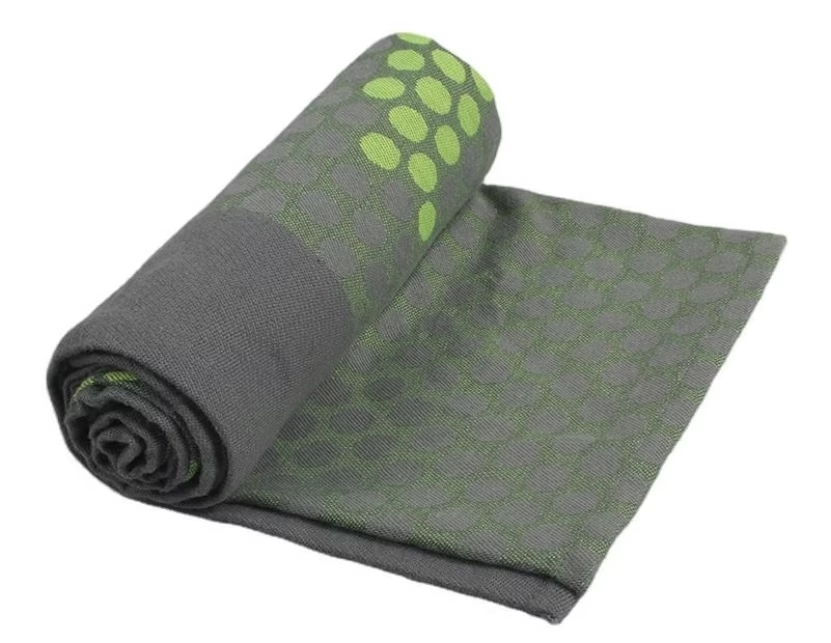
Not all recycled polyester is equal. Ordinary recycled fiber may work for light use home textiles, but airline blankets need tighter control.
Engineered rPET requires attention to spinning stability, surface treatment, brushing, dyeing, and shrinkage control. For airline buyers, “recycled” should never be the full specification. The better question is: what performance level has this recycled yarn been built to reach?
How Does Anti-Pilling Technology Protect Inflight Blanket Appearance?
Pilling is a small surface defect with a large commercial impact. Loose fibers come out of the yarn, tangle, and form small balls on the fabric surface. Under cabin lighting, those pills are easy to see.
Inflight blankets face constant abrasion. Passenger clothing, armrests, seat pockets, laundry friction, and repeated folding all attack the surface.
DOTEX Textile’s anti-pilling technology reaches Grade 4 or above. For anti pilling inflight blankets bulk sourcing, that is not a minor claim. It means the blanket is more likely to keep a clean surface after repeated use and washing. The benefit is not only cosmetic. A cleaner surface extends service life, reduces complaints, and keeps the blanket looking closer to the airline’s intended standard.
Can Recycled Airline Blankets Resist Fading and Shrinking in High Temperature Industrial Washing?
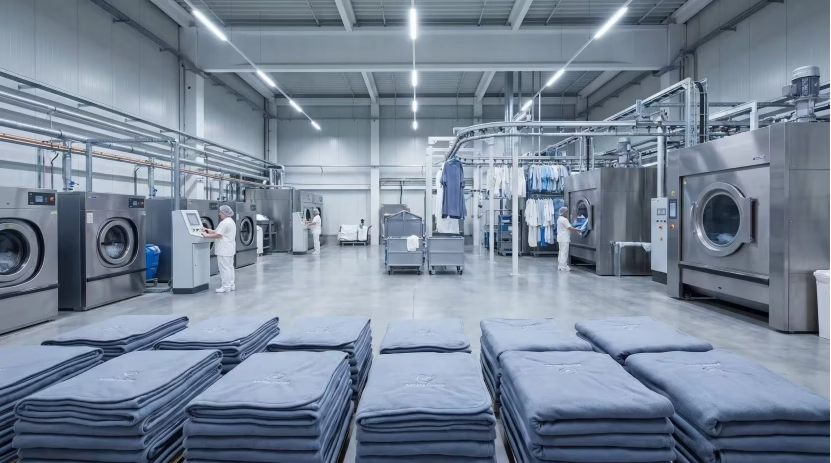
Commercial laundry is rough. Temperatures are high, detergents are stronger, and load sizes are much larger than home washing. Drying and handling are faster too. This is where colorfastness and shrinkage control become serious. A faded blanket may still be usable, but it no longer supports the cabin image. A shrunken blanket creates size inconsistency across inventory.
DOTEX Textile recycled airline blankets are designed to withstand 100+ industrial wash cycles. The target is clear: no obvious fading, no meaningful shrinkage, and no quick surface collapse.
A useful procurement habit: test samples through the actual laundry process before bulk approval. Lab data is helpful. Real laundry behavior is harder to fake.
Eco-Friendly vs. Durable: Is There Still a Trade Off?
There can be a trade off when recycled blankets are selected only by price. There does not need to be one when the textile is properly engineered.
| Buyer Concern | Ordinary Low Grade Recycled Blanket | DOTEX Textile Engineered Recycled Airline Blanket |
| Pilling after washing | Higher risk | Anti-pilling Grade 4+ |
| Shape retention | May shrink or deform | Designed to resist shrinkage |
| Color stability | May fade after high temperature washing | Built for colorfast performance |
| Wash durability | Limited lifecycle | 100+ industrial wash target |
| Cost per use | May rise through replacement | Lower lifecycle cost potential |
The real comparison is not eco-friendly versus durable. It is uncontrolled recycled textile versus engineered recycled textile. That distinction matters when an airline buys thousands of blankets.
How Do 100+ Wash Cycles Reduce Airline Blanket Cost Per Use?
Cost per use is simple:
Cost per use = blanket unit cost ÷ number of usable wash/use cycles
A cheaper blanket that fails after 30 washes may cost more than a stronger blanket that survives 100+ washes. The replacement cycle is the hidden cost. So are extra storage, quality complaints, and disrupted replenishment planning.
This is why durable cabin blankets for airlines are a finance issue as much as a textile issue. Better yarn strength, anti-pilling performance, color stability, and shrinkage control all protect each purchased blanket.
What Should Airlines Check Before Buying Recycled Inflight Blankets in Bulk?
Before approving a bulk order, buyers should ask for performance details, not just a soft hand feel.
- Recycled material certification, such as GRS
- Yarn breaking strength data
- Anti-pilling grade, preferably Grade 4+
- Industrial wash test result, ideally 100+ cycles
- Washing temperature condition
- Shrinkage rate after repeated washing
- Colorfastness after hightemperature washing
- GSM, size, edge finishing, and packaging options
- OEM/ODM customization ability
- Sample testing before bulk order
- Longterm supply capacity
For anti-pilling inflight blankets bulk purchasing, this checklist separates real durability from sales language.
Why Choose DOTEX Textile for Durable Recycled Airline Blankets?
DOTEX Textile is positioned for airlines that want recycled blankets without accepting short service life. Its recycled airline blanket solution focuses on high strength yarn, anti-pilling performance, shrinkage resistance, color stability, and industrial wash durability.
Softness can be shown in one sample. Long term appearance after commercial washing needs process control.
DOTEX Textile also supports OEM and ODM customization, including size, GSM, color, edging, packaging, and airline branding. A capable supplier needs to keep the product stable while adjusting specifications.
FAQ
Q: Can recycled airline blankets really last through 100+ industrial washes?
Yes, if they use high strength recycled yarn, stable construction, anti-pilling finishing, and shrinkage resistant processing.
Q: What anti-pilling grade should airline buyers look for?
Grade 4 or above is a strong target for airline blanket programs.
Q: Do recycled airline blankets shrink after high temperature washing?
Poorly engineered blankets can. DOTEX recycled airline blankets are designed to resist noticeable shrinkage under industrial washing conditions.