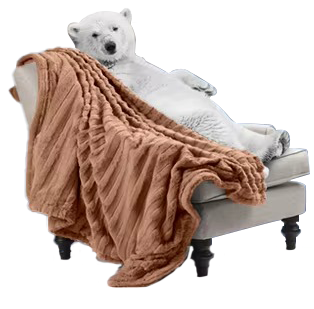

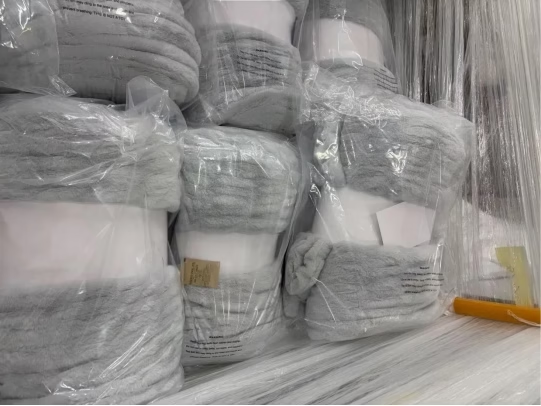
Yes, but size alone does not decide the result. Fabric width must work with pile direction and shrinkage. Cutting and sewing must support the same target. So must finishing and inspection. Here, “square” means straight edges with four clean corners. The two diagonals stay within the agreed difference. It does not mean equal length and width. One attractive sample is easy. Repeating that geometry across a winter retail order is the real factory test.
Start With a Manufacturable Oversized Blanket Specification
Twin and Queen are selling names. King is too. They are not production dimensions. The purchase order needs finished measurements after conditioning. A 100 x 108 inch faux fur throw blanket is 254 x 274.32 cm. That scale exposes problems hidden by a 50 x 60 inch throw.
The technical pack states total GSM and pile height. It defines the backing and lining. Seam allowance and shrinkage limits also matter. Finished weight is estimated from area and combined GSM, then adjusted for trims. Usable width must be measured because nominal width includes damaged edges. A seamless panel is feasible only when effective width covers the cut dimension and finishing loss without reversing the pile.
How Production Keeps Oversized Faux Fur Blankets Straight
Large faux fur is heavy and often elastic. It shifts during spreading and may grow along a seam. Geometry has to be controlled before sewing.
Straighten the Grain Before Cutting
Rolls relax before spreading so stored tension can release. Bow and skew are checked across the usable width. Correcting the weft here prevents a long edge from drifting. Rolls are grouped by dye lot and width. Mixing them may change both shade and cutting yield.
Keep Every Panel in the Same Pile Direction
Reversed nap changes the apparent color. Under a store spotlight, matching panels can suddenly look unrelated. Markers need clear direction arrows. Rotating a panel to save fabric is not acceptable. One way laying consumes more material but protects shade consistency and hand feel.
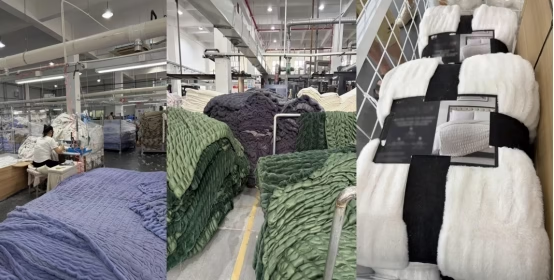
Cut and Sew Without Pulling the Shape Out of Line
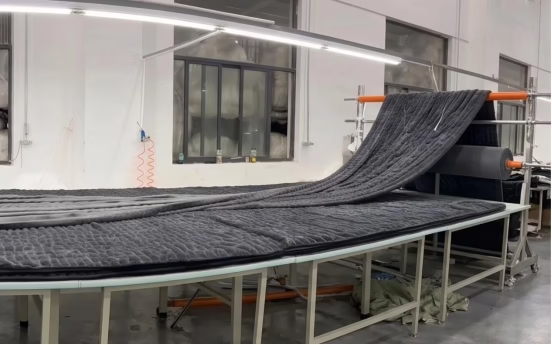
Automatic cutting works only when the marker and relaxed fabric are correct. Panels are checked at the corners and across both diagonals. Differential feed or elastic overedge stitching controls a stretch backing without rippling the edge. A minor feed imbalance on a sofa throw can pull an entire King side out of line.
Stabilize the Construction
Heat setting and pre-shrinkage limit movement after washing. A 190°C setting may suit a validated polyester construction. It is not universal. Pile and backing must tolerate the process. Print materials and trims must too. The conditioned throw blanket is measured again. An unstable construction stops here, not at the importer’s warehouse.
Build a Measurable Bulk Order Inspection Plan
A bulk specification needs numbers. “Looks square” is not an acceptance rule. Record finished dimensions and both diagonals. Set limits for bow or skew. Do the same for corners and edges. Log pile direction and shade by lot. Check finished weight. Seam strength needs a test result. Shedding and wash stability do too.
Limits come from the signed technical pack and sealed sample, not a lighter fleece program. Incoming inspection starts the record. First piece approval follows machine setup. In-line checks catch feed drift or reversed nap while correction is still possible. Post finishing measurements expose movement caused by heat. Final random inspection uses the buyer approved AQL plan.
Define critical defects before production. Define major and minor defects as well. Results stay traceable by SKU and fabric lot. One clean carton cannot represent a container. The release report shows sample size and defect counts. It also records measurements and wash test results.
Prove Packing Efficiency Without Sacrificing Rebound
Thick faux fur may pass sewing inspection yet ship too much air. Test packing with the approved construction. Record dimensions before and after compression. State the ratio formula and carton size. Add units per carton. Net weight and CBM support a defensible 20GP or 40HQ estimate.
Too much vacuum can hard fold a corner. It may flatten pile or load the seams. Open a trial pack after the agreed storage period. Check it immediately, then after the defined recovery time. Two hour rebound is different from visible fold lines the next day.
Standard King Fleece or Heavy Faux Fur?
Standard King fleece is lighter. It folds easily and consumes less carton volume. It suits practical winter bedding where retail price matters. Heavy faux fur has stronger visual impact and a warmer hand. Unit weight rises. Nap sensitivity and freight exposure rise too.
| Factor | Standard King Fleece | Heavy Faux Fur |
| Finished weight | Lower | Higher |
| Pile direction sensitivity | Low to moderate | High |
| Stretch during sewing | Easier to control | Requires tighter feed control |
| Packing volume | Lower | Higher, often needs compression |
| Dimensional risk | Lower | Greater diagonal and edge risk |
| Best use | Practical winter bedding | Premium bed throws and sofa covers |
Choose Twin or Queen from actual mattress coverage. Treat King the same way. A 100 x 108 inch faux fur blanket gives generous coverage or a deep drape. Bed end throws and sofa covers often need less width. Furniture measurements prevent excess cost and an awkward fit.
Scale From Approved Sample to Repeatable Production
The sealed sample locks fabric and color. It also fixes pile direction and hand feel. Dimensions and stitching need approval. So do labels and packing. The file includes a BOM and technical pack. Bulk fabric is checked against it before cutting.
Issue MOQ and sample time for the approved construction. Confirm lead time and peak season capacity at the same point. A heavy 100 x 108 inch SKU cannot inherit terms published for smaller blankets. Final AQL inspection closes the production file.
What Buyers Should Send for an Accurate Feasibility Review
Send the finished size and fabric construction. Add GSM and pile height. State the backing and colors. Include quantity per SKU plus packing requirements. DOTEX Textile can then review effective width and marker yield. The same review covers dimensional tolerance and carton volume. Add the destination and ship date. A drawing or reference sample helps. A size name does not.
Conclusion and CTA
Oversized consistency comes from a measurable specification and documented process control. DOTEX Textile presents an integrated supply chain covering knitting through packing. Contact DOTEX Textile with the target size and construction. Add GSM and order quantity. Include packaging requirements. Request an oversized blanket feasibility review with a sample plan and carton loading proposal.
FAQs
Q: Can a 100 x 108 inch faux fur blanket be made without a center seam?
Possibly. Effective width must cover cut allowance and shrinkage without reversing the pile. Check the roll specification before promising it.
Q: How should buyers measure whether a large blanket is square?
Measure after conditioning. Compare both diagonals. Check edges and corners against the signed tolerance sheet. Include bow or skew.
Q: Does vacuum packing permanently flatten faux fur?
Not necessarily. Pile construction and compression level affect recovery. Storage conditions matter too. Approve the package after a timed rebound test using production material.