
For winter home textile collections, a heavyweight plush blanket often becomes one of the products that defines the entire seasonal display. Customers may not know the exact GSM or fabric construction, but they notice something immediately when they touch it.
Does it feel full?
Does it fall naturally on a sofa?
Does it still look expensive after opening from packaging?
These details decide whether a blanket feels like a premium retail product or just another thick textile item.
Premium Look Starts With More Than Just High GSM
When buyers request a heavyweight plush blanket, GSM is usually the first specification discussed. It is easy to measure and easy to compare.
But GSM alone does not create a premium product.
For many winter retail programs, a single layer heavyweight plush blanket is commonly developed around 500–550 GSM. A double layer construction can reach approximately 1100 GSM, creating a much fuller appearance and stronger visual impact.
The difference is not only the number on the specification sheet.
A good heavyweight plush blanket balances:
- fiber composition
- pile height
- fabric density
- thickness
- softness
- breathability
- recovery after compression
A buyer visiting a factory can usually feel the difference within a few seconds. Pick up two blankets with similar GSM. One may feel bulky. The other has better drape and returns to shape faster. That difference comes from engineering details.
How Fabric Construction Creates a Luxury Retail Experience
The surface appearance of a blanket is what attracts attention on a retail shelf. The internal construction is what keeps customers satisfied after purchase. A heavyweight plush blanket needs both.
Fiber composition affects softness and durability
The fiber choice influences almost every part of the final product.
Microfiber polyester remains popular in the blanket market because it offers softness, durability, and production stability. Recycled polyester options are also becoming more common as brands look for sustainable product lines. However, fiber quality is not only about softness when the product is new.
Retail buyers should consider:
- Does the color remain stable after washing?
- Does the surface maintain its smooth feeling?
- Does the fabric recover after repeated use?
A blanket that feels impressive on day one but loses its appearance after washing creates problems for both retailers and consumers.
Plush pile height and density define the tactile experience
The first customer interaction with a blanket is usually touch.
A deeper plush surface creates a richer hand feel. Higher density helps the blanket maintain a fuller appearance, especially when displayed folded or placed on a sofa.
A customer looking at a winter catalog may not see the GSM value. They see:
- a thick folded edge
- a smooth plush surface
- a natural falling shape
- a comfortable bedroom scene
Those visual signals sell the product.
Double-layer construction improves thickness and drape
Double-layer heavyweight plush blankets are often selected for premium ranges because the construction creates more volume.
The advantages include:
- stronger three dimensional appearance
- better drape on beds and sofas
- improved thickness perception
- more luxurious hand feel
A common mistake is making a blanket simply thicker without considering handling. A premium blanket should feel substantial but still practical.
It should fold well.
It should recover after unpacking.
It should not become uncomfortable to move.
Product Sizes and Specifications Retail Buyers Need to Plan Collections
A premium blanket range usually needs multiple sizes because the usage scenarios are different.
Common retail sizes include:
| Size | Application |
| Throw | Sofa, chair, decoration, gift market |
| Twin | Single bed collections |
| Queen | Mainstream bedding retail |
| King | Premium bedroom collections |
| 100×108 inches | Oversized luxury bedding market |
For buyers, finished size is only one part of quality control.
Other important specifications include:
- finished weight per piece
- size tolerance
- corner squareness
- edge straightness
- washing shrinkage
- fabric distortion after production
A blanket can have excellent fabric but still look poor if the corners are not square or the dimensions vary between batches. Large retailers usually evaluate consistency more than a single perfect sample.
Manufacturing Control Behind a Premium Heavyweight Plush Blanket
Large width fabric cutting helps reduce unnecessary stretching and improves dimensional consistency. After cutting, processes such as heat setting help stabilize the fabric structure. Pre-shrinking treatment is another important step. Without proper control, a blanket may change after washing.
During bulk production, quality checks normally focus on:
- GSM consistency
- stitching quality
- color matching
- fabric defects
- finished measurements
DOTEX Textile operates multiple production facilities covering knitting, dyeing, sewing, and related textile processes, supporting OEM and ODM blanket production for international buyers. This is where manufacturing experience becomes visible. A premium looking blanket depends heavily on production control.
How Heavyweight Plush Blankets Become Premium Retail Products
A good blanket does not sell only because of its technical specifications.
Presentation matters.
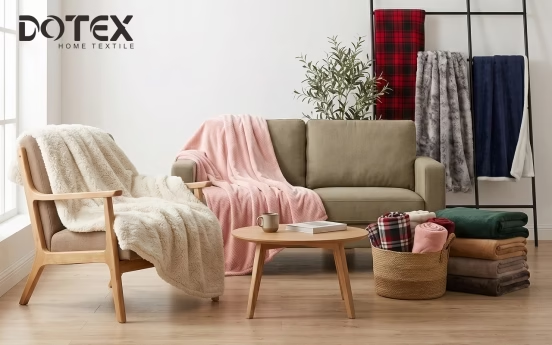
In a home store, a heavyweight plush blanket may appear in several ways:
A folded stack beside winter bedding.
A throw placed naturally on a sofa corner.
A layered bedroom display with matching pillows.
These scenes communicate comfort before customers touch the product. For retailers, color selection and photography are part of product development. A premium blanket should look valuable online as well. Close up texture images, lifestyle photography, and clear size presentation reduce customer uncertainty.
Packaging, Logistics and Cost Considerations for Heavyweight Blankets
Heavy blankets create another challenge: logistics.
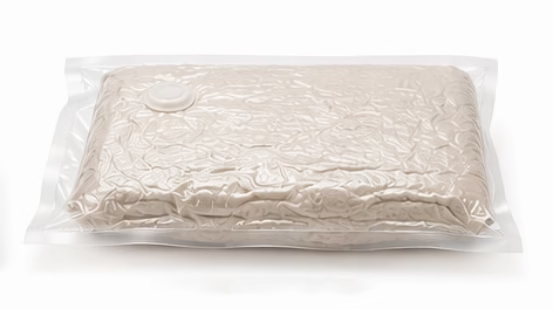
A bulky product takes more container space and warehouse capacity. Vacuum compression packaging is often used to improve shipping efficiency. However, compression performance must be tested.
After opening, the blanket should:
- recover its loft
- regain softness
- return close to its original appearance
Poor recovery can lead to customer complaints and higher return rates.
For importers, the calculation is not only product cost.
You also need to consider:
- container loading efficiency
- warehouse space
- storage time
- packaging quality
- customer return risk
A well designed heavyweight plush blanket should provide a premium unboxing experience, not a disappointing first impression.
What Retail Buyers Should Ask Their Blanket Supplier
Before developing a heavyweight plush blanket collection, buyers should confirm several technical points:
- What GSM ranges can be produced?
- Is the blanket single layer or double layer?
- What fiber compositions are available?
- What is the expected shrinkage after washing?
- What size tolerance can be controlled?
- How does the blanket recover after vacuum packing?
- Can colors, labels, packaging, and sizes be customized?
These questions help separate a real manufacturing partner from a simple trading supplier.
Conclusion
A premium heavyweight plush blanket range is not created by weight alone.
The products that perform well in retail usually combine controlled GSM, suitable fiber selection, dense plush construction, accurate sizing, and reliable finishing processes. These details determine whether a blanket feels luxurious in a showroom, looks attractive in product photography, and maintains quality after delivery to customers.
With professional textile engineering and customized production capability, DOTEX Textile supports retailers, importers, and wholesalers in developing premium blanket collections for global markets.
Contact DOTEX Textile for customized heavyweight plush blanket solutions.
FAQ
Q: What GSM is considered a heavyweight plush blanket?
A heavyweight plush blanket commonly starts around 500 GSM. Many premium single layer products use approximately 500–550 GSM, while double layer designs can reach around 1100 GSM.
Q: Is a heavyweight plush blanket the same as a weighted blanket?
No. A heavyweight plush blanket creates a thicker and warmer feeling through fabric construction, density, and fiber structure. It does not use added weight materials like a weighted blanket.
Q: What sizes are popular for heavyweight plush blankets?
Throw, Twin, Queen, King, and oversized sizes such as 100×108 inches are common choices for retail and wholesale markets.
Q: How can buyers reduce quality problems after importing?
Working with suppliers that control fabric processing, pre-shrinking, cutting accuracy, and bulk inspection can reduce issues such as shrinkage, uneven edges, and inconsistent sizing.
Q: Can heavyweight plush blankets be customized for private label brands?
Yes. Manufacturers with OEM/ODM capabilities can usually customize fabric, GSM, size, color, labels, packaging, and other product details based on retail requirements.